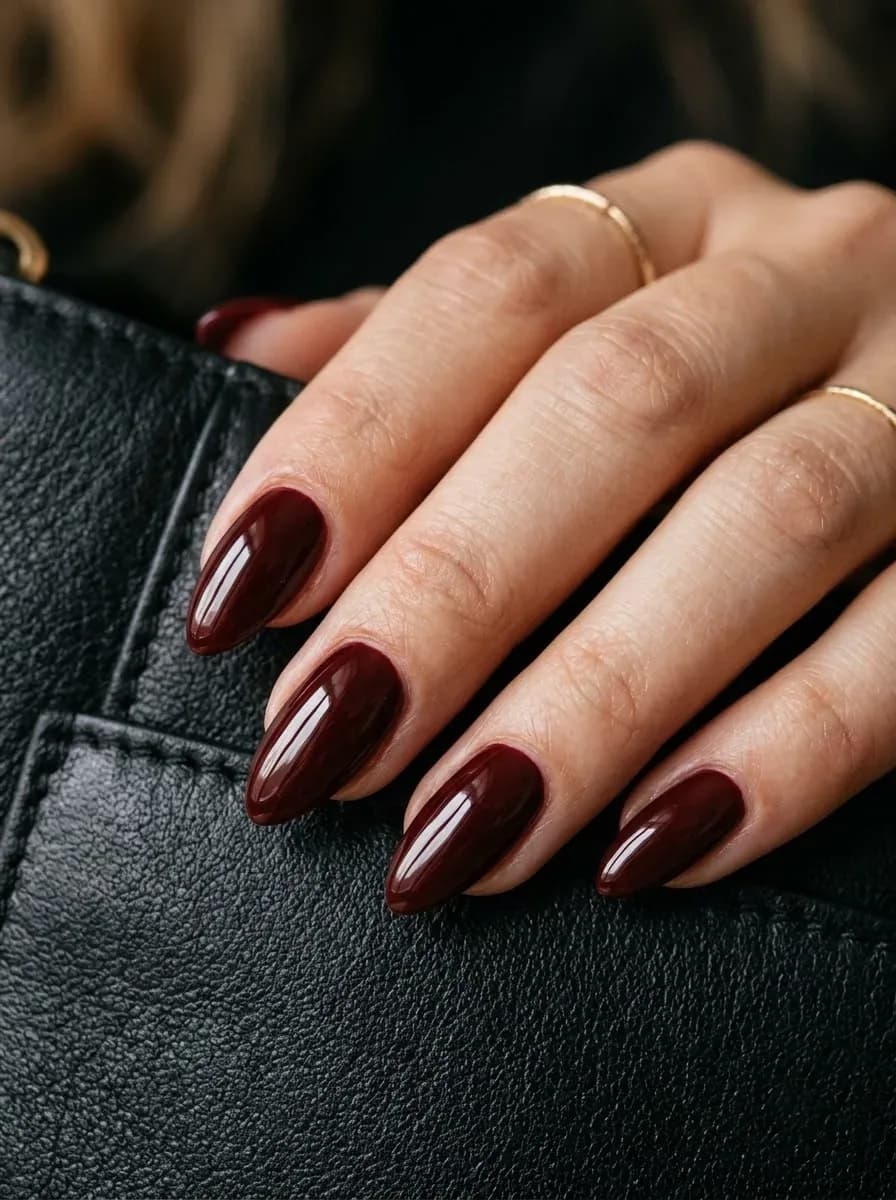
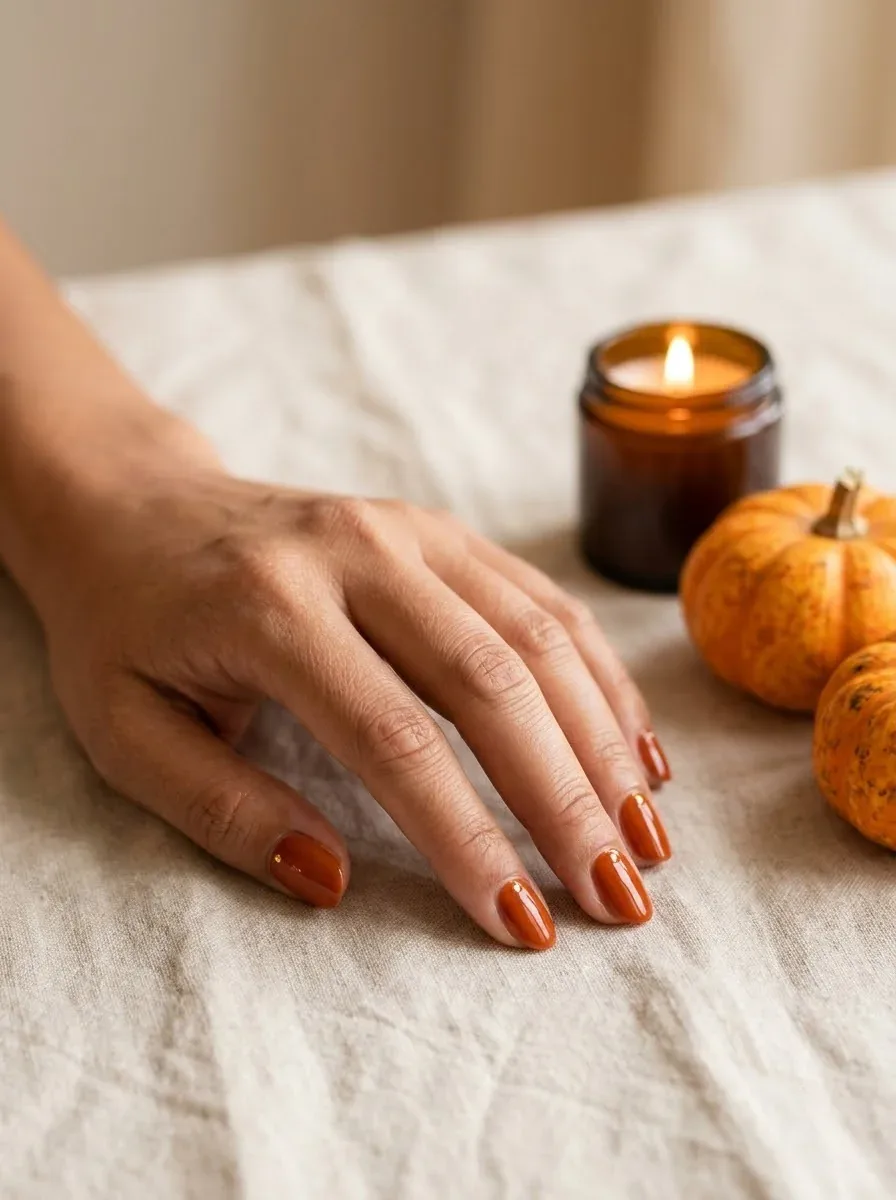
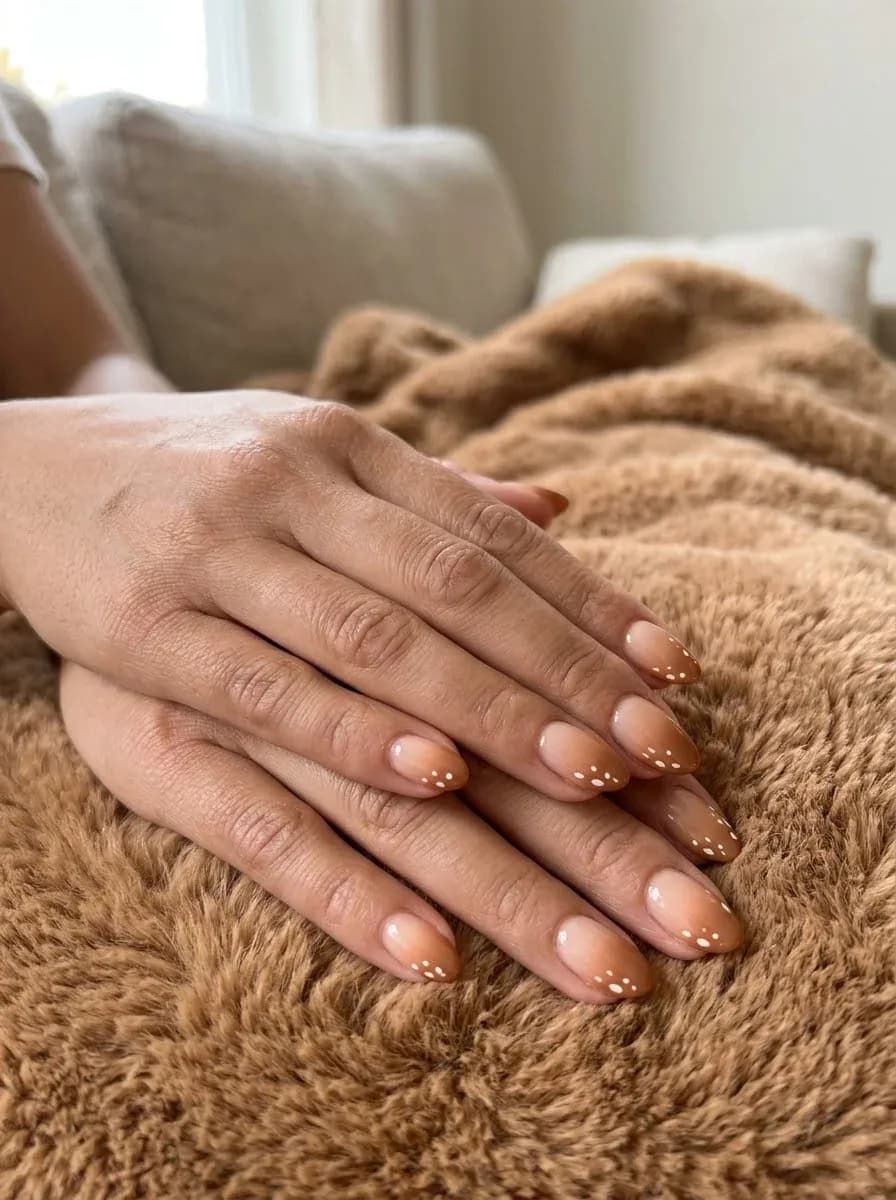
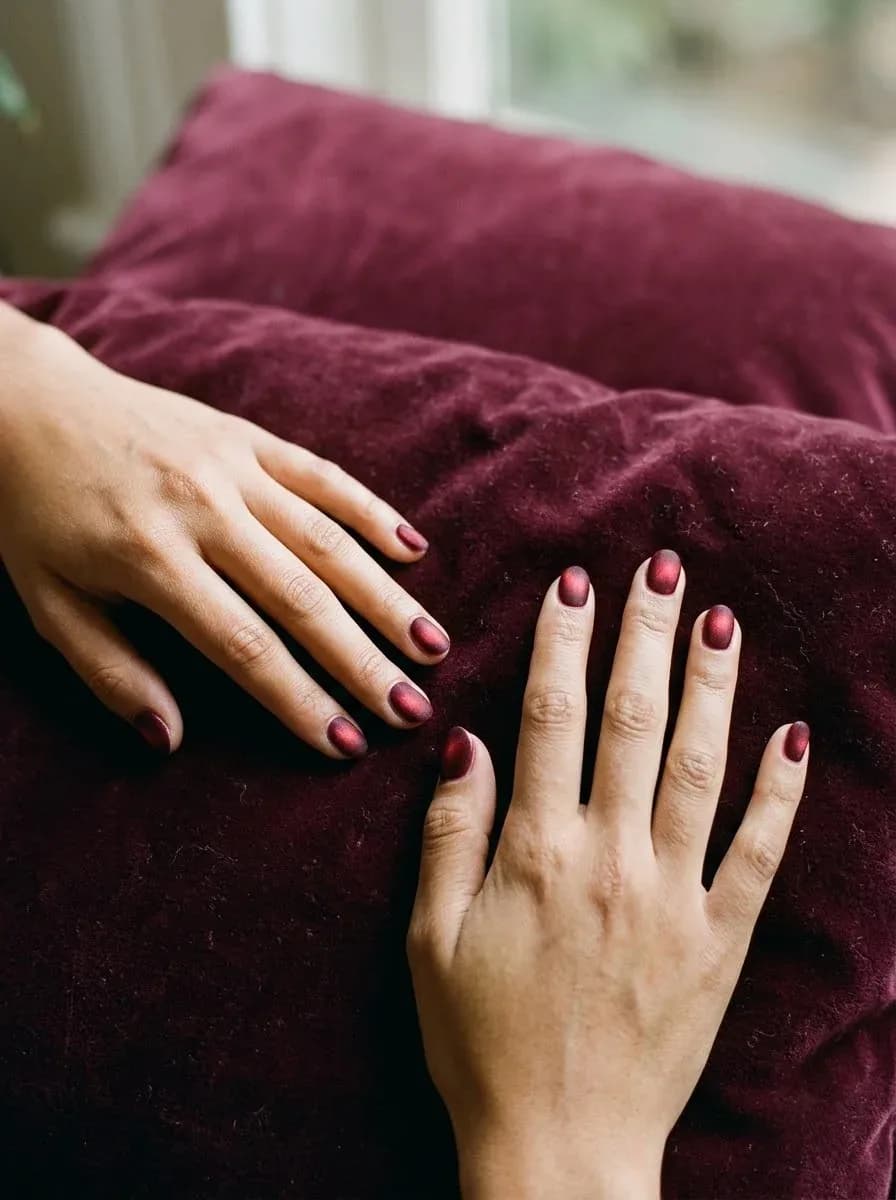
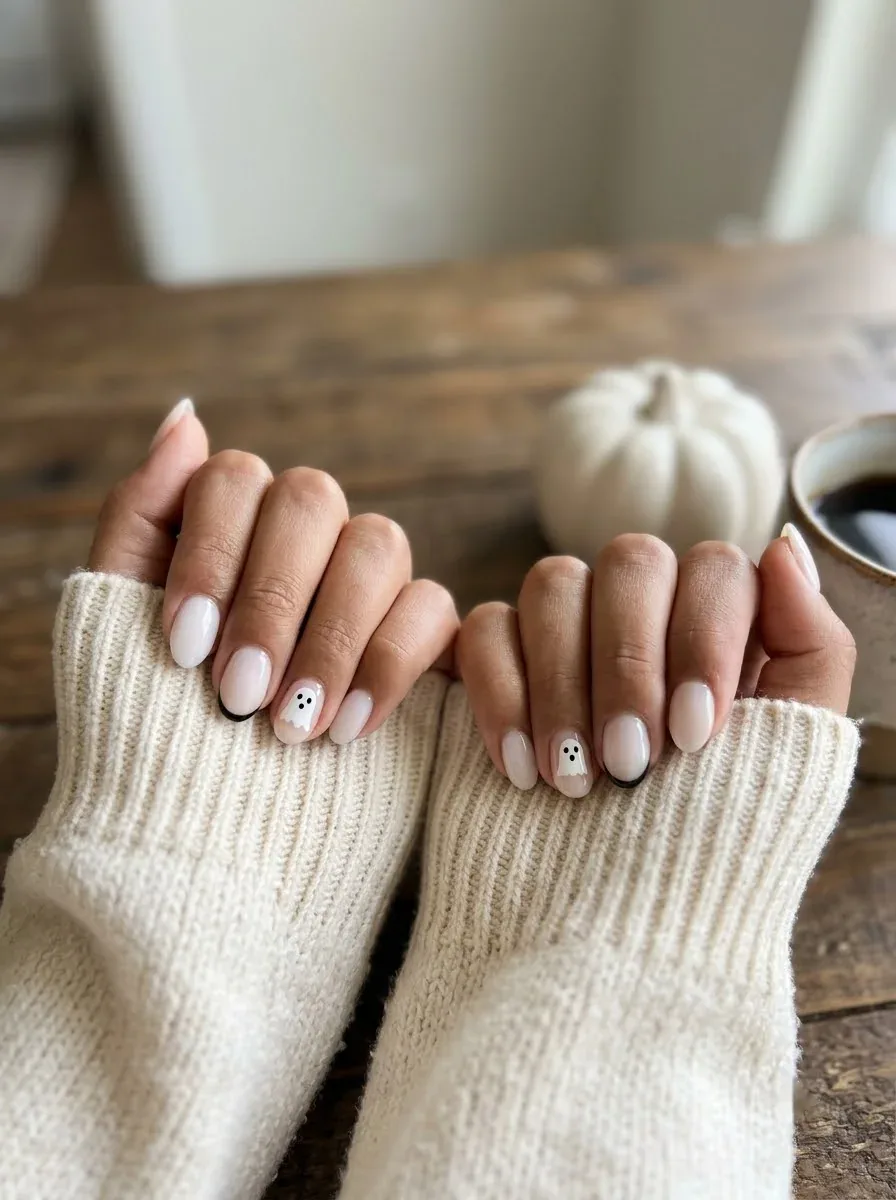
Labels describe the reference’s appearance, rather than a confirmed polish or application system. Follow the photographer links for image sources. Lighting can affect both the shade and the apparent shine.
medium · almond · brown · glossy
Tortoiseshell Black Almond Nails
The reference combines dark nails with a mottled brown-and-black pattern. Decide whether you want the contrast across the full set or on a few accent nails. For a shorter version, keep the pattern visible by using fewer, larger patches rather than very fine marks.
Photo: Bryony Elenashort · oval · nude · glossy
Soft Nude Salon Manicure
Use this salon reference to discuss a pink-beige base and a rounded outline. Compare the shade on your own hand and specify whether the natural tip should show through. The photograph does not establish the polish brand or application system.
Photo: Pablo Escobarmedium · almond · black · glossy
Sleek Black Almond Nails
Here the dark color makes the tapered outline the main feature. Ask for the amount of taper you want, as well as the length. If keeping your natural length is a priority, discuss a less pointed version rather than assuming extensions are necessary.
Photo: Bryony Elenashort · round · pink · glossy
Classic Pink Round Nails
A pink color and compact rounded outline keep the design focused on the base shade. Compare a swatch for saturation: pale pink, bright pink, and pink with more coverage give different results even without added artwork.
Photo: DESIGNECOLOGISTshort · oval · nude · matte
Everyday Nude Oval Nails
Use the neutral color and curved outline as separate references. Choose a nude shade against your own hand, and confirm whether you prefer a reflective or matte surface. Lighting in a photo can make the finish difficult to identify.
Photo: Budka Damdinsurenmedium · almond · blue · glossy
Navy Gold Abstract Art Nails
The useful details are the contrast between blue, white, and gold-colored marks, and the placement of the abstract pattern. Tell the artist which lines you want to retain. For less artwork, keep the color palette and place the pattern on one or two nails.
Photo: Ari Kurniawanmedium · square · blue · glossy
Blue White Landscape Art Nails
Blue and white create a picture-like design with several small details. Ask how much of the artwork can remain legible at your chosen length. A simplified blue-and-white arrangement is another option if you prefer less detailed painting.
Photo: fullpower302long · coffin · white · glossy
Purple Black Marble French Tips
The contrasting tips are the focal point of this white, purple, and dark-colored reference. Point out both the marbled effect and how much of the nail it occupies. On a shorter version, choose whether the tip width or the pattern detail matters more.
Photo: marsnailsmedium · almond · nude · glossy
Everyday Nail Art Almond Nails
Compare the placement of the accent against the neutral base, rather than treating the whole photograph as a fixed design. Ask for a similar balance of empty space and artwork at your preferred length. The exact application technique needs confirmation from the creator.
Photo: allison christinemedium · almond · red · glossy
Classic Red Almond Nails
The red color and tapered outline can be chosen independently. Compare red swatches for depth and warmth, then show the artist how rounded you want the point to be. There is no need to copy the reference length to keep the color idea.
Photo: koalaaaahshort · oval · nude · glossy
Glossy Nude Everyday Nails
This reference is useful for discussing a neutral shade with a reflective appearance. Check how much coverage you want and whether the natural nail should remain visible. Ask for a sample on your nail if matching the undertone is important.
Photo: shmatovlong · stiletto · red · glossy
Red White Ornate Stiletto Nails
The red-and-white detailing uses the space of a long, pointed outline. Before booking, ask about the time for detailed artwork and whether extensions are needed. For a shorter adaptation, select a single linework detail instead of compressing the entire pattern.
Photo: deaura2026medium · square · green · glossy
Bold Green Square Nails
The green shade and flatter tip give you two clear choices to discuss. Compare the intensity of the color on a swatch and decide whether to keep defined corners or soften them. A photograph cannot confirm the product used to create the look.
Photo: Sharon McCutcheonmedium · almond · red · glossy
Red French Tip Nails
Use this reference to specify a red edge against a lighter base. The width and curve of the tip affect the result as much as the red shade. Ask for a finer edge if you want more of the base visible on a short nail.
Photo: Esther Olayiwomedium · round · red · chrome
Wet Look Red Chrome Nails
The reference emphasizes a highly reflective red appearance. Confirm whether you want a metallic reflection or simply a glossy red finish; they are different requests. The photograph alone does not verify a chrome powder, topcoat, or other product.
Photo: sunsticemedium · oval · red · glossy
Classic Red Oval Nails
A curved outline and red base make this a useful reference for a single-color manicure. Match the red using swatches rather than the surrounding accessories or lighting. Show how much length and how rounded a tip you want to keep.
Photo: shmatovmedium · almond · red · glitter
Red Gold Glitter Accent Nails
This red-and-gold reference can help you explain where you want sparkle placed. Decide whether it should cover an accent nail, appear at the tips, or be distributed across the set. Confirm the particle size and coverage with a sample if available.
Photo: Tainara Paixaolong · coffin · red · glossy
Bold Red Coffin Nails
Compare the tapered sides and flat tip of the outline before selecting the red shade. Ask whether the shape is possible at your desired length. Keeping the red while choosing a shorter square or squoval outline is a separate design option.
Photo: Bansah Photographyshort · square · red · glossy
Office Ready Red Square Nails
Use the flatter outline and red color as a starting point, then choose a length that fits your own routine. The title does not establish suitability for every workplace. Confirm your preferred corner shape and any dress requirements before choosing the finished design.
Photo: Felicia Montenegromedium · almond · red · glossy
Cherry Red Almond Nails
This reference pairs a red shade with a tapered silhouette. Camera settings can change how warm or cool the red appears, so compare real swatches if the shade matters. Specify a rounded point and your preferred length separately.
Photo: Felicia Montenegromedium · almond · white · glossy
Classic French Tip Nails
The contrast between a pale base and a white edge defines this French-tip reference. Show your artist the curve and thickness of the edge you like. On shorter nails, a narrower tip can leave more of the base visible.
Photo: Anna Meshkovshort · round · pink · glossy
Soft Pink Round Nails
A pale pink and rounded outline are the main details to compare. Ask whether you want a translucent wash of color or fuller coverage. A pink appearance in a photograph is a style reference, rather than evidence about the condition of the nails.
Photo: jojobean24medium · almond · blue · matte
Blue White Ombre Nails
The blue-and-white transition is the detail to retain in this ombre reference. Specify the direction of the blend and where each color should be strongest. Confirm matte or glossy separately, since the photographed lighting can soften reflections.
Photo: marsnailslong · coffin · pink · glossy
Pink White Floral Accent Nails
The floral details combine pink and white with a longer outline. Tell the artist which nails should carry the flowers and how much empty space you want around them. A shorter version can use a smaller number of motifs to keep them distinct.
Photo: kaurmndeep1992medium · square · white · glossy
White Pink Two Tone Nails
The arrangement of white and pink is the main feature of this two-color reference. Point out where you want the colors to meet and whether the division should be repeated on every nail. Match the opacity of both colors as well as their shades.
Photo: okello_1